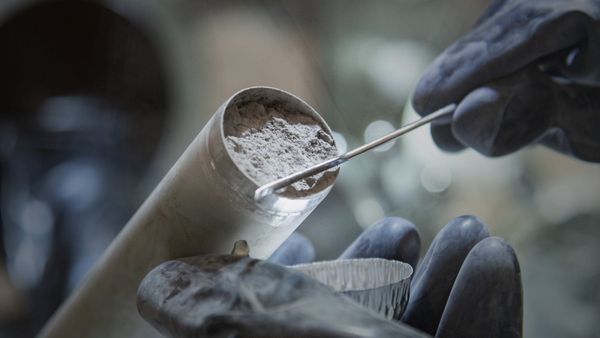
Scottsdale startup with ASU ties wins $1.27 million NASA contract for spacecraft technology
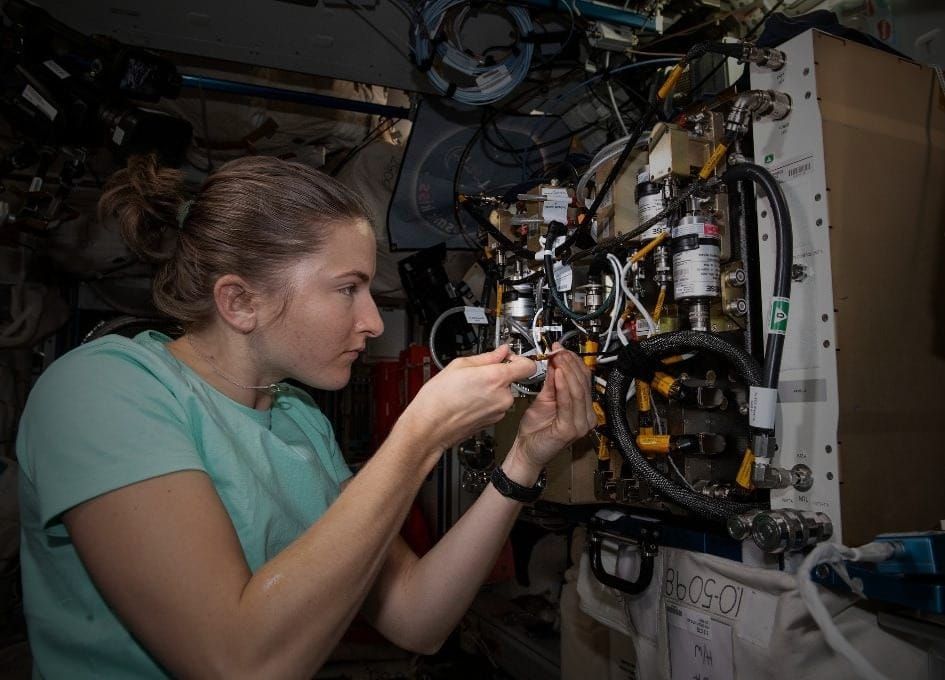
The two-year federal award will advance technology designed to produce hydrogen peroxide using light and specialized optical fibers.
A Scottsdale technology company with ties to Arizona State University has received a $1.27 million NASA contract to develop a system capable of producing hydrogen peroxide using visible light, an innovation that could eventually help astronauts manufacture essential cleaning and disinfecting chemicals in space.
NASA awarded H2O Insights LLC the $1,274,976 contract Nov. 6 through its Small Business Innovation Research program, according to federal contracting records.
The project, titled "High-efficiency Photocatalytic Hydrogen Peroxide Production Using Polymeric Optical Fibers and Visible Light," is scheduled to run through Nov. 9, 2028.
The technology uses specialized plastic optical fibers to distribute light to catalytic materials, triggering chemical reactions that produce hydrogen peroxide from water and oxygen.
Hydrogen peroxide is widely used for disinfection, cleaning and water treatment. Producing it aboard spacecraft could reduce the need to transport chemical supplies from Earth, particularly during extended missions.
According to NASA's published research description, the proposed system uses low-power, visible-light-emitting diodes to deliver light through polymer optical fibers. The fibers provide surfaces for photocatalytic reactions, while hollow-fiber membranes deliver oxygen.
The approach is designed to produce hydrogen peroxide without requiring the chemical reagents typically associated with conventional production methods.
The contract represents the second phase of NASA's Small Business Innovation Research program, which provides federal funding to small businesses developing technologies with potential government and commercial applications.
H2O Insights previously received a $149,704 Phase I contract in September 2025 to investigate the technology's feasibility.
The latest award supports further development beyond that initial research.
Arizona State University connection
The company's technology has roots in research involving Arizona State University, where Regents Professor Paul Westerhoff has worked on water treatment and the use of light-based technologies to remove contaminants.
Westerhoff and his wife, environmental engineer Kelly Westerhoff, established H2Optic Insights, a company developing optical-fiber technologies for water treatment.
ASU identified the company and its founders in a March 2026 article about water innovation in the Southwest. The university reported that the company's technology uses visible and ultraviolet light to control biological growth and remove contaminants from water.
NASA's earlier research descriptions also identify ASU as a collaborator in work involving photocatalytic hydrogen peroxide production.
The university's Zimin Institute for Smart and Sustainable Cities lists an invention disclosure for a high-efficiency hydrogen peroxide production system using optical and membrane fibers. The disclosure names Westerhoff and researcher Harsheen Kaur Rajput.
The available records do not establish whether ASU will receive a portion of the newly awarded contract or what role university researchers will have during its second phase.
From water treatment to space exploration
The research builds on efforts to develop compact chemical production systems that could operate in environments where transporting supplies is expensive or impractical.
NASA has identified onboard hydrogen peroxide generation as a potential solution for spacecraft cleaning, disinfection, wastewater stabilization and planetary protection.
Successful development could allow spacecraft to generate chemicals when needed rather than depending entirely on supplies launched from Earth.
The technology could also have applications on Earth, including decentralized water treatment and chemical production in remote locations.
However, the research remains in development. The award does not establish that the system is ready for operational use aboard spacecraft or that it can manufacture hydrogen peroxide commercially at scale.
The NASA contract is scheduled to conclude in November 2028.